The brief
CTS tests construction materials for customers across the country. Its workshop needed to hold a steady 18°C every day of the year, whatever the weather outside, so that testing could be done under consistent conditions.
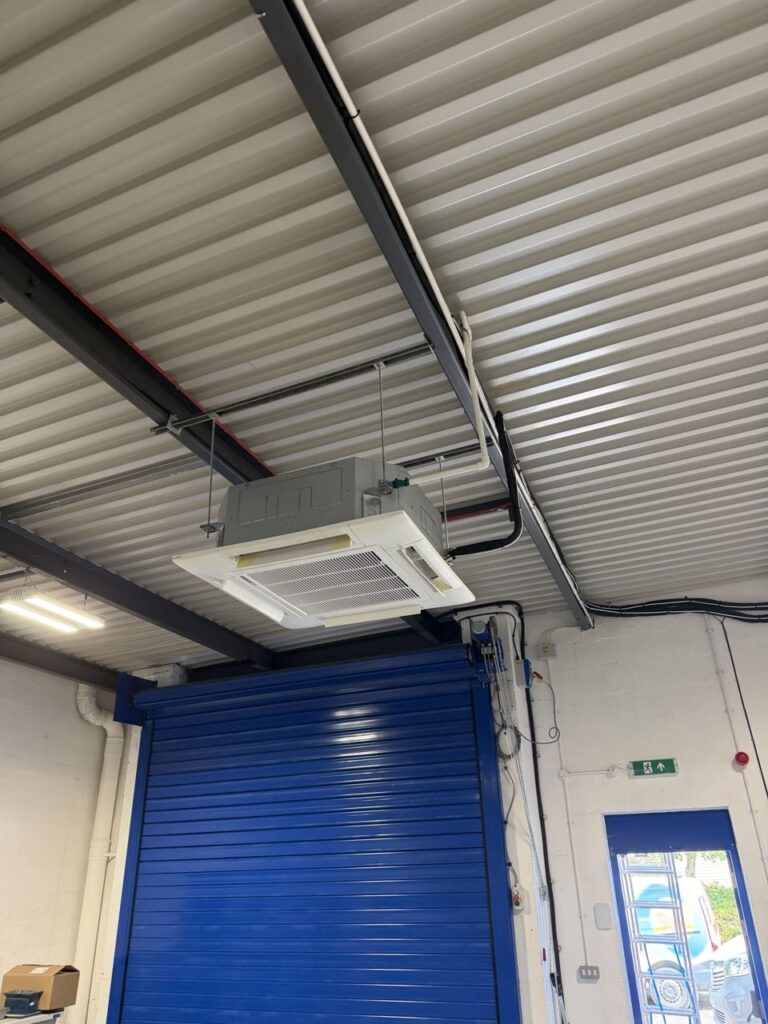
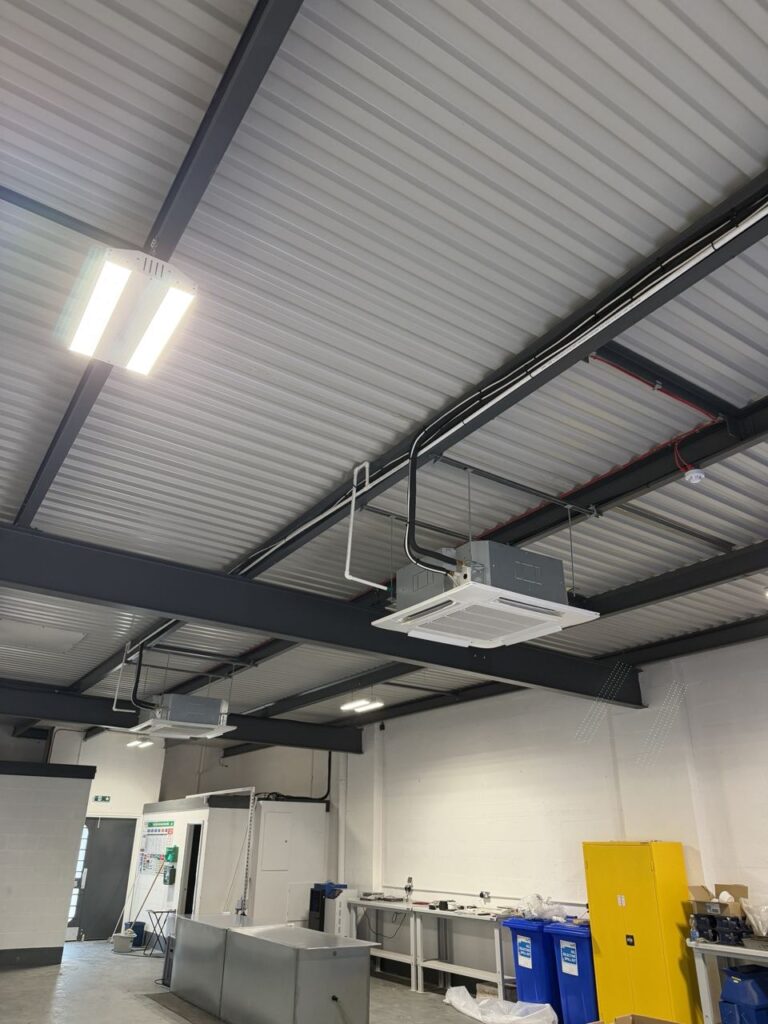
The space is a high-roof industrial unit with steel beams and a roller shutter, so the equipment had to be hung securely and kept clear of the working floor.
The solution
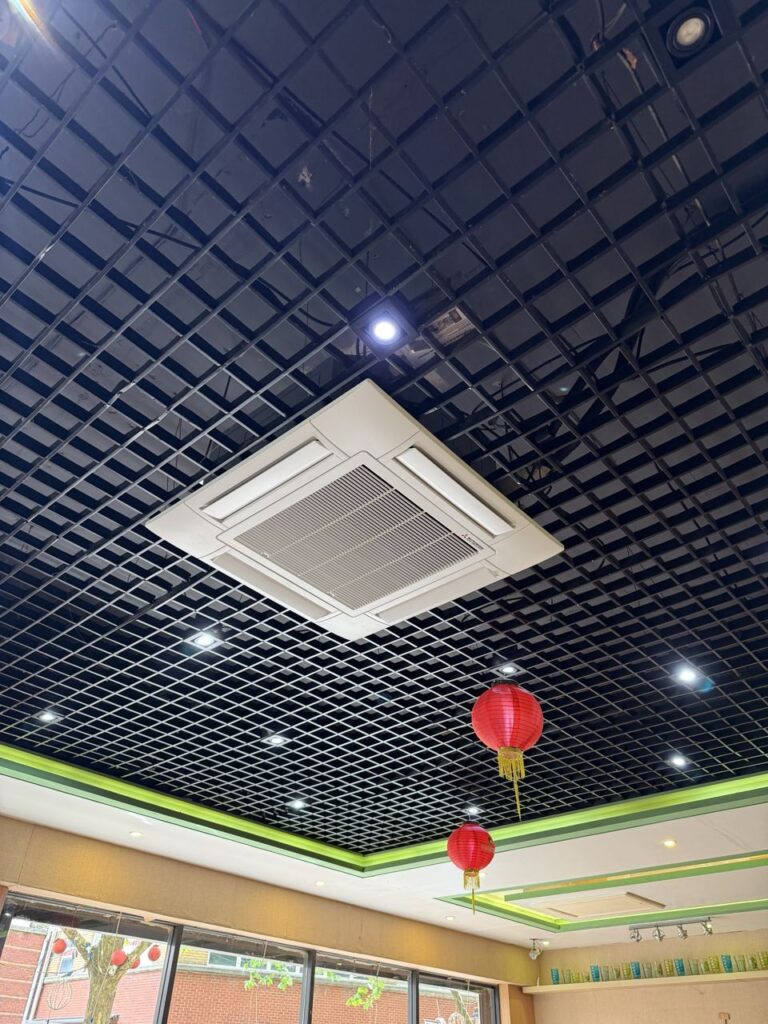
We fitted two 10kW Mitsubishi Heavy Industries four-way ceiling cassettes, one over the roller shutter end and one further into the workshop, so the air is spread across the whole floor.
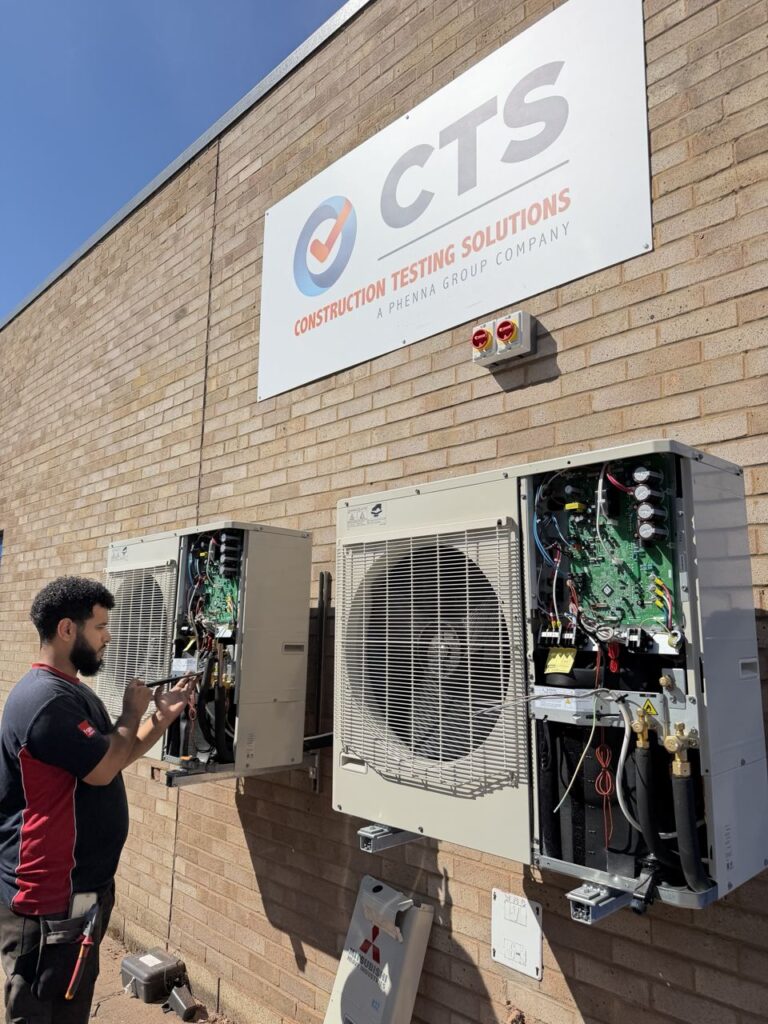
MHI inverter heat pumps both cool and heat, which is what holding 18°C in every season needs: cooling in summer, and heating when the weather turns cold. Each cassette has its own outdoor unit on the building’s brick wall, so the two systems run independently.
The installation
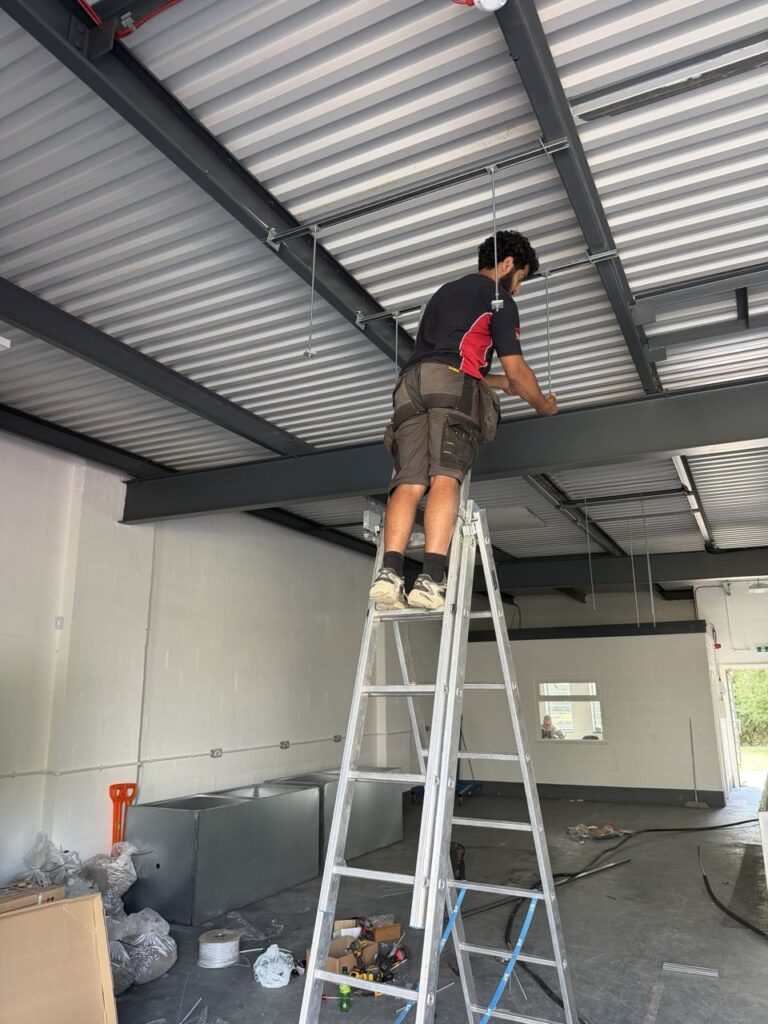
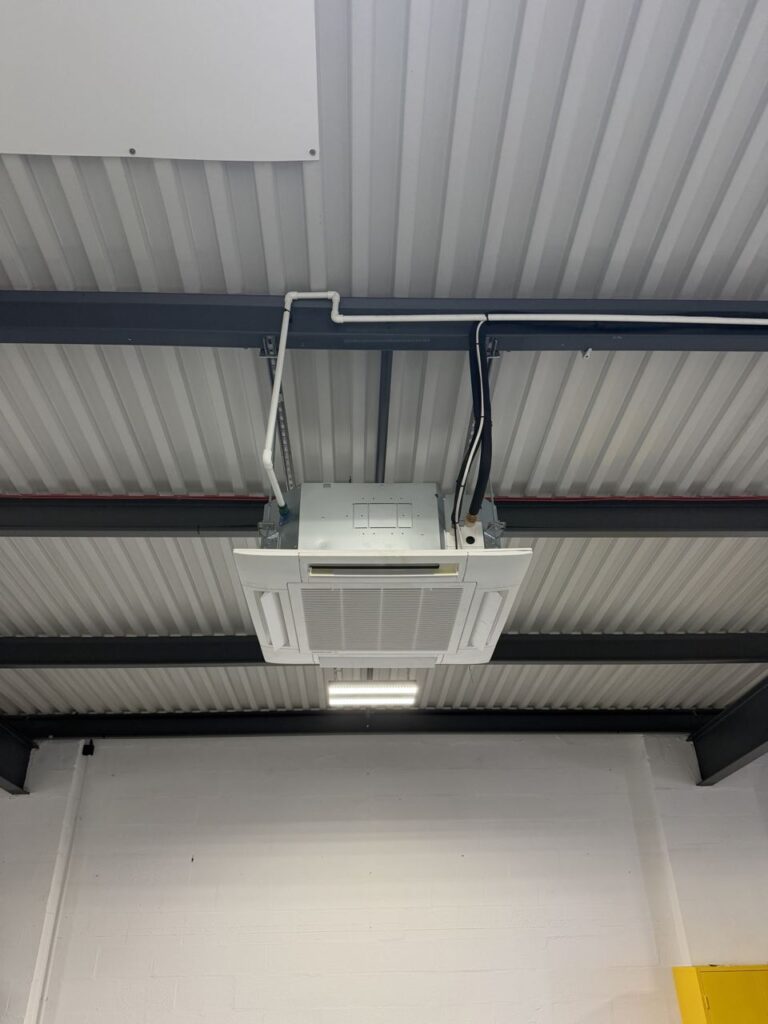
- Fixing: each cassette hangs from galvanised strut and threaded rods fixed to the steel framework, so the weight sits on the structure and the units stay level.
- Pipework: insulated refrigerant lines and cabling run along the beams to the outdoor units, kept tight to the steelwork and out of the way.
- Drainage: a condensate drain runs from each cassette in white pipe, routed so water drains away reliably.
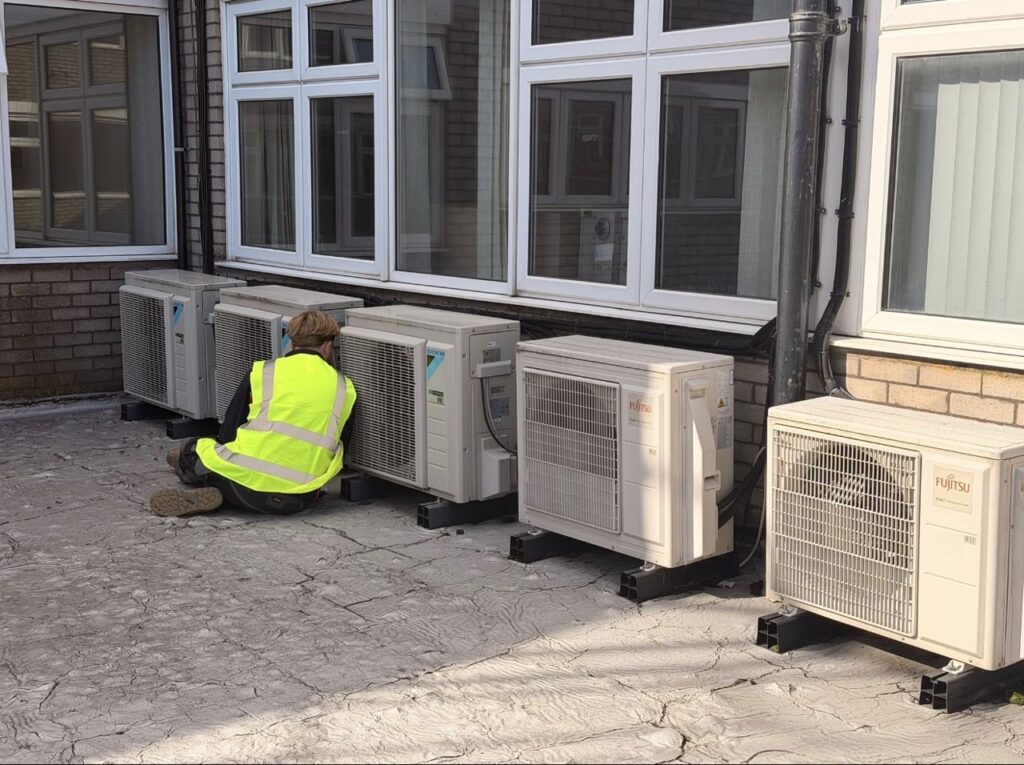
- Outdoor units: two outdoor units are wall-mounted on brackets under the building’s signage, with local isolators fitted alongside.
- Commissioning: both systems were tested and set up on site before handover.
The result
CTS now has two independent MHI systems holding its workshop at 18°C throughout the year, with a neat installation that stays out of the working space.
Why Optimal
- We design for the building: the units were chosen and positioned for this workshop, not just picked off a shelf.
- REFCOM-registered engineers: the same team does the design, installation and commissioning.
- Manufacturer-backed: as a Mitsubishi Heavy Industries Diamond Partner we can offer up to 10 years’ manufacturer warranty on qualifying systems.
- Servicing afterwards: planned maintenance keeps a temperature-critical space running reliably.